Ceramic Coating vs Wax: What Actually Works in Tasmania
Hobart's climate is milder than the mainland, but that doesn't mean your paint gets an easy ride — here's how wax and ceramic coating actually compare.
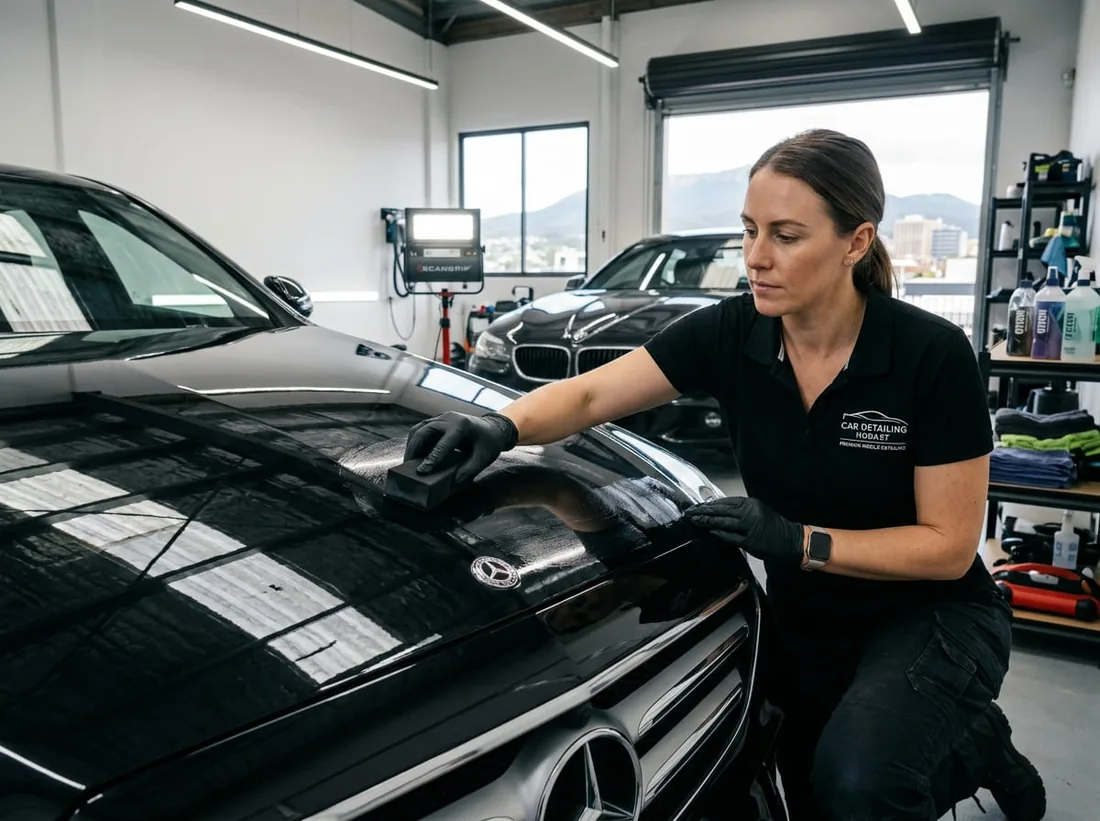
Every detailer gets asked this: is ceramic coating actually worth it over a traditional wax, or is it just an upsell? In a climate like Hobart's — relatively mild, but genuinely wet and humid for a good chunk of the year — the answer comes down to how each option copes with what your car is actually exposed to.
How Hobart's Climate Plays a Part
Hobart doesn't get brutal heat, but it is a consistently damp climate — rainfall is spread fairly evenly across the year rather than concentrated in a short wet season, and winter humidity regularly sits in the high 70s to low 80s (%). That combination of moisture, coastal salt air and mild-but-real UV exposure is exactly the environment where a wax's protection runs out fastest.
Wax: The Traditional Option
- Gives a genuinely deep, warm shine
- Affordable and quick to apply
- Breaks down in weeks to a few months — faster with regular rain and humidity
- Needs reapplying regularly to keep protecting the paint
Ceramic Coating: The Long-Term Option
- Chemically bonds to the paint rather than sitting on top of it
- Genuinely hydrophobic — water and road grime bead and slide off rather than sitting and drying on the panel
- Lasts years, not weeks (our Ceramic Coating packages run 2–5 years depending on the option)
- Makes ongoing washing significantly easier, since dirt doesn't bond to the surface the way it does on bare or waxed paint
Our Honest Take
Wax still has its place — it's a good, low-cost option if you're detailing the car yourself between full details. But for a car that lives outdoors in a wet, coastal climate like Hobart's, ceramic coating earns its cost back many times over in reduced maintenance and genuinely better long-term paint condition. We generally recommend pairing it with paint correction first, so the coating locks in a flawless finish rather than sealing over existing swirls.
Quick Questions
No — wax needs to be fully removed first so the coating can properly bond to the paint. We handle that decontamination as part of the coating process.
Yes — in fact it can matter more, since infrequent driving usually means the car sits outside collecting grime, dew and salt air without the natural rinse of regular use.